At Western Veterinary Conference this year, I saw so many brands launching yak chews. I thought they might be a healthier alternative to bully sticks, so I decided to try them for Otto.
Then I took him in for his dental appointment and learned he had chipped teeth.
I had been thinking about the ingredients. I hadn’t thought enough about how hard the chew was or what that could mean for his teeth.
The part I didn’t know
The American Animal Hospital Association specifically lists yak milk chews among hard chews that can damage or fracture dogs’ teeth. A simple check: if you can’t make an indent with your thumbnail, it’s too hard. AAHA’s guidance.
Veterinarian Dr. Beth Turner raises the same concern in her guide to popular dog chews: hard cheese chews can be tough enough to break teeth. Preventive Vet’s article.
What does a damaged tooth look like?
It doesn’t always look like a tooth split in half. You might notice a chipped tip, a missing piece, or an uneven edge. Some damage is harder to see.
Why I’m sharing this
I’m sharing Otto’s experience because I want to help you avoid the same mistake, or something worse. A more serious tooth fracture can be painful and may need a root canal or extraction. Veterinary guidance.
I thought I was choosing a healthier chew. After finding out about Otto’s chipped teeth, I do not recommend yak chews. I hope sharing this helps you make a more informed choice for your dog.
Related reads
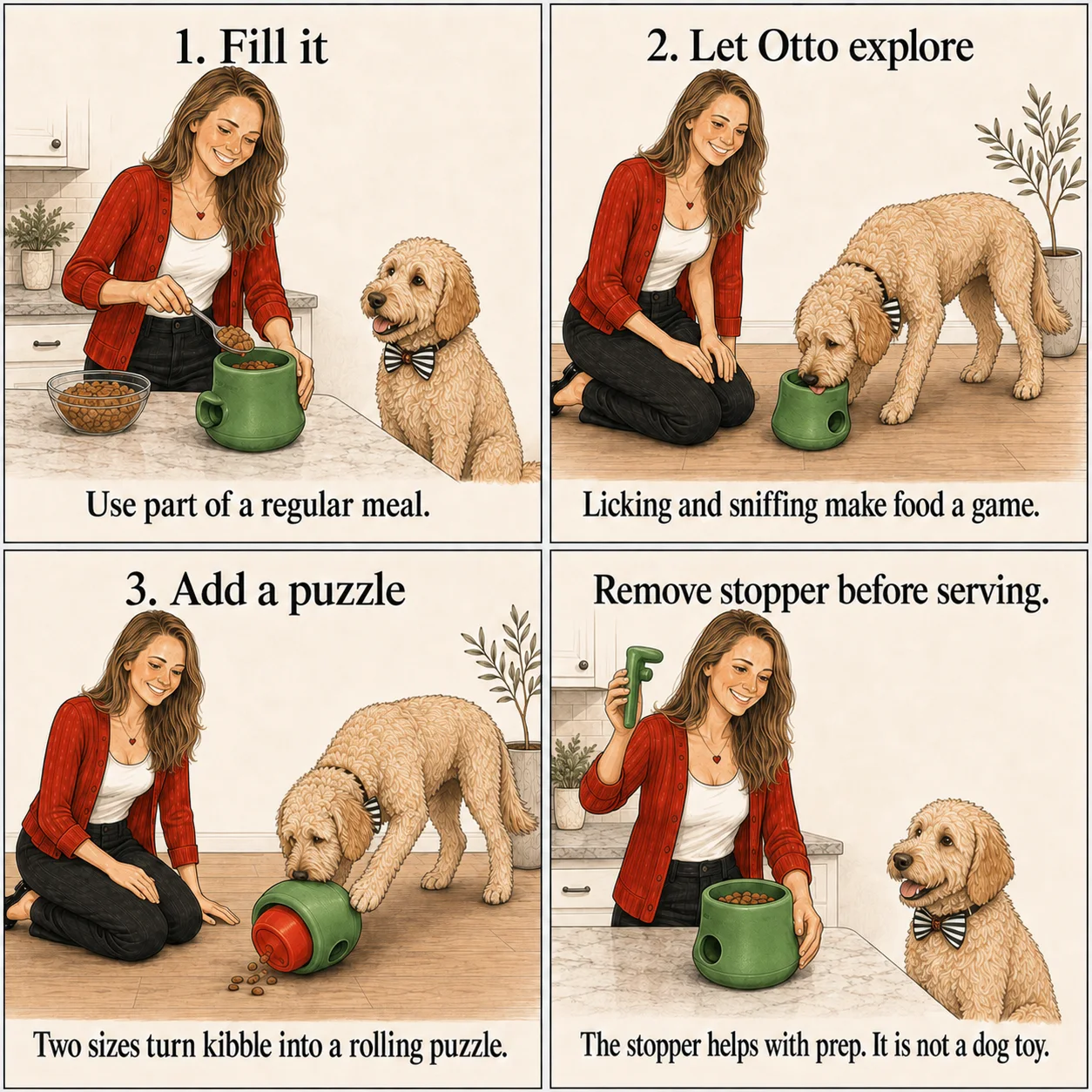
Turn Dinner Into a Dog Puzzle
Katie and Otto show how to fill a TOPPL, turn it into a rolling puzzle, and use the stopper safely.
Read article →
This “Earthworm Dance” Spray Is a Very Cool, Very Dog-Specific Idea
A Korean scent mist uses an earthworm-conditioned-soil ingredient to invite dogs to sniff, rub, and roll—but it is enrichment, not a proven anxiety treatment.
Read article →